
When you support American Ancestors, you ensure that our mission is carried out in the following key areas:
Educate
Dee Baecher-Brown
In the U.S. Virgin Islands, family history and civic history are woven together; our community’s story is American history. When St. Thomas, St. Croix, and St. John became American in 1917, it reshaped our civic identity, but our connections to American history began long before. When students trace their family roots, they are not stepping outside civic history; they are stepping into it.
Read more of Dee's story
During the Revolutionary era, enslaved people and slaveholders moved between the Caribbean and the American colonies. Though not yet officially American, we were part of the Atlantic world that shaped the Revolution. Those movements deepen how we read national milestones and remind us that the American story has long been interconnected.
Our partnership with American Ancestors’ Youth Education and 10 Million Names programs brought it home. Through genealogy training for educators, we saw individual discovery strengthen collective memory. Teachers embraced new tools to help students explore family histories and connect them to local and national events. When a student uncovers a name in a record, history becomes tangible. It shifts from something distant to something lived.
For Virgin Island students, seeing themselves in American history, builds pride and deepens critical thinking. These discoveries restore context, bridge island heritage with the American experience, and prepare young people to understand both.
Accessibility is essential to that work. As an island community, isolation can limit access to research tools and professional development. Curriculum materials, archival access, and training help overcome that barrier. American Ancestors provided resources, support and sensitivity to our community. Civic memory must remain accessible to scholars, families, teachers, and students if it is to serve the public good.
Institutions like the Community Foundation of the Virgin Islands and American Ancestors carry a responsibility to shape civic understanding. We must provide accurate scholarship, grantmaking, and educational tools that empower communities to explore their stories. Our designation as the Humanities Council for the Virgin Islands in 2024 strengthened our work and helped revitalize humanities learning in our territory.
At its best, civic memory uplifts while it informs. It connects individual lives to national milestones and affirms that history is shared. When history is shared in that way, it becomes more than remembrance; it becomes a public good.
Dee Baecher-Brown has served as President of the Community Foundation of the Virgin Islands since 1996, working with donors and businesses, and nonprofits in the U.S. Virgin Islands, to prioritize programs and services that enrich the quality of life on the islands, with particular attention to the most vulnerable residents.

For Cynthia Wallace, education through American Ancestors opened doors to discoveries she never imagined. With guidance from expert genealogists and access to online courses, she traced her Irish roots to County Offaly, uncovered Civil War service, and even connected branches of her family through DNA. Now in her seventies, she continues her studies from home, grateful for the opportunity to learn and grow as part of a welcoming community. Your support ensures that people of all ages can keep learning, asking questions, and uncovering the truth of their family stories.
Youth Education
American Ancestors is inspiring the next generation through its free Family History Curriculum, created for students in grades 4–8. Developed by leading genealogists and educators, this innovative program makes family history accessible to all students—regardless of background or family configuration. By exploring their own stories, students gain critical research and thinking skills, discover a stronger sense of identity, and connect with the shared human experience.
“Research from the Family Narratives Lab indicates that knowledge of family stories and history is linked to positive youth development. This innovative curriculum from American Ancestors empowers students to explore their personal connection to history, develop a sense of identity through time, and build stronger relationships with their families and communities. The benefits of this curriculum are applicable to students of all ages.”
-Robyn Fivush, PHD, Emeritus Professor of Psychology, Emory University

Inspire
Toby Webb
I first visited the Newbury Street Brim-DeForest Library in 1991, and my personal research goal has always been to identify each of my immigrant ancestors and to trace my way back to their immigration stories. After 30-plus years, that has proven to be more than 60 lines, with folks arriving as New England Puritans, Pennsylvania Quakers, Germans, and Scots-Irish headed to the Shenandoah Valley, Cavalier enslavers in Tidewater, Virginia and Maryland, and even a Spanish-born lawyer from Peru.
Read more of Toby's story
At each step in my research journey, as I have needed to learn about new record sets or struggled to differentiate among same-named neighbors, American Ancestors has offered access to important databases and other resources. Print resources from the stacks got me going; the internet tools available on-premise have been invaluable. More importantly, the staff at Newbury Street love to ponder research problems and to offer solutions.
I try to make the Salt Lake City research tour every year because it offers, not just a week of uninterrupted research time, but opportunities to discuss my work with the professional genealogists from American Ancestors who lead the tour. Formal and informal consultations move my research along. A chance “Have you looked at …?” comment at dinner one night led to the biggest breakthrough in my work so far. Our guides also are current on the new technologies being used in research; Melanie McComb and David Lambert walked me through an analysis of confusing DNA results and steered me away from misidentifying a misassigned paternity. Rhonda McClure showed me the value of the newly-available Full Text tool in finding unindexed mentions of my ancestors in local records.
With almost five dozen chapters written, the support I am getting now is in making certain that the stories I have told are clear and adequately documented. American Ancestors’ heritage of accurate, well-proven publications is in the organization’s genes. If I am able to publish my work for my family, it will be a resource they can rely on, because the experts at American Ancestors have been guiding me since I entered the Brim-DeForest Library 35 years ago.
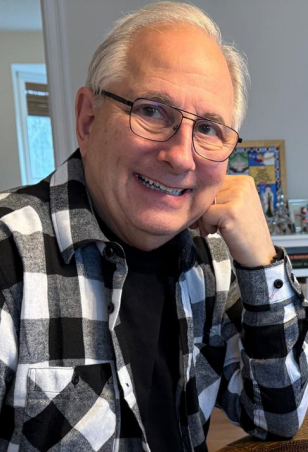
Morrison “Toby” Webb is a retired EVP, External Affairs and Corporate Communications for Bell Atlantic (now Verizon) and past General Counsel, NYNEX and New England Telephone. He is a Life Benefactor, Councilor, and past Trustee. He resides in Falmouth Foreside, Maine.
Family history is more than research—it’s a source of inspiration that transforms how people see themselves and their place in the world. Through 10 Million Names, we are working to recover the identities of an estimated ten million enslaved men, women, and children whose names and stories were nearly erased. Every name restored brings dignity, humanity, and hope, sparking moments of self-discovery that inspire new generations. With your support, we can ensure that these stories are not forgotten but remembered, honored, and shared.
Watch as Henry Louis Gates, Jr., host of Finding Your Roots on PBS, interviews American Ancestors President and CEO, Ryan J. Woods, where they discuss the importance of the 10 Million Names project.
Connect
Dale Yoe’s journey into family history began when her mother expressed interest in learning more about her ancestors. It didn’t take long for Dale to rediscover American Ancestors, and what she found went far beyond records and databases. Expert genealogists walked alongside her, helping uncover hidden family stories, reconnect with long-lost relatives, and even trace her grandfather’s true identity. These discoveries reshaped her family’s story and created a legacy for future generations. Your support ensures that others can find the same connections and preserve history that might otherwise be lost.
Guided By Experts—Sally MacKenzie
Professional Resources Help To Verify the Facts
Trust, but verify. Those three words helped to launch my personal interest in genealogy eleven years ago when my husband and I purchased an 1856 rowhouse in Center City, Philadelphia. It was claimed that the house was built for a Civil War widow and that only four families occupied the home over a period of 157 years. My curiosity was piqued about the histories of the people who occupied the home before me, but the math didn’t add up. The Civil War hadn’t even begun in 1856.
Continue reading
How could I verify the facts? I attended a local historical society lecture and learned the basics of house research. A path led me from deeds to death records, visits to the city archives, several museums, churches, and historical repositories in Philadelphia. I pieced together the ownership history of my new home and verified the facts with solid research: there was no Civil War widow, and eight families had lived in the home before us.
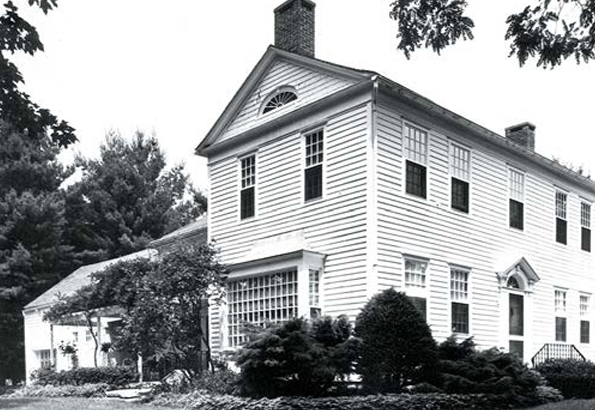
After that experience, you’d think we’d be a bit wary of realtor marketing when we set out to buy a home in the Berkshires, but we’re fools for a good story. The realtor claimed the house was built in 1758 for the daughter of a prominent colonel of the French & Indian War, who was also a founding father of the town. Again, I wanted to know more about the occupants of the home, and I wanted to confirm when the house was built. Trust, but verify.
It was about this time that I discovered the resources available at American Ancestors to genealogists and the simply curious. I didn’t really feel I was skilled enough to call myself a genealogist, but I certainly was curious. I love a good mystery and fitting together the pieces of a puzzle.
I attended online classes at American Ancestors during the pandemic and quickly found course offerings that taught me how to dig deeper to uncover the facts. I started out with probate records, land records, and court records. “The Basics of NE Research” was invaluable. Each virtual program I attended was well organized and full of usable information and techniques for a rookie genealogist like me. The one-on-one consultations with the professional staff were a great opportunity to get personalized answers to my most burning questions. I had great success in learning more about my home and its lineage, but then I hit a wall, and it was time to call in the pros.
I contacted American Ancestors and described the research work I had completed and the questions that I hadn’t been able to answer. I was paired up with a professional genealogist, and she got to work on my behalf. Over the course of several months, she investigated leads I hadn’t considered and ultimately pulled many loose threads together for me. She even suggested other methodology techniques, like dendrochronology, that might provide answers.
While the dendrochronology study proved inconclusive, I’ve recently learned about diary entries from the colonel that suggest it was not his daughter, but his grandson, for whom the house was built in 1790. I’ll keep digging, and I know the online, in-person, and professional resources at American Ancestors will help me verify the facts.
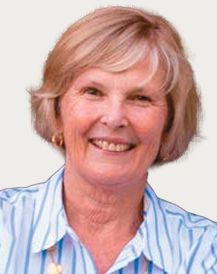
Sally MacKenzie is a former marketing and public relations professional. She is a Friend Member and a Councilor. She resides in Philadelphia, Pennsylvania, as well as the Berkshires in Massachusetts.
Become an American Ancestors Insider
Do you want to receive exclusive email updates directly from American Ancestors?
Get direct and instant access to a member of our team, who will share information about your impact and update you on new projects that align with your interests.