
Read about supporters who are dedicated to making expert guidance, educational resources, and historical treasures accessible to all family historians.
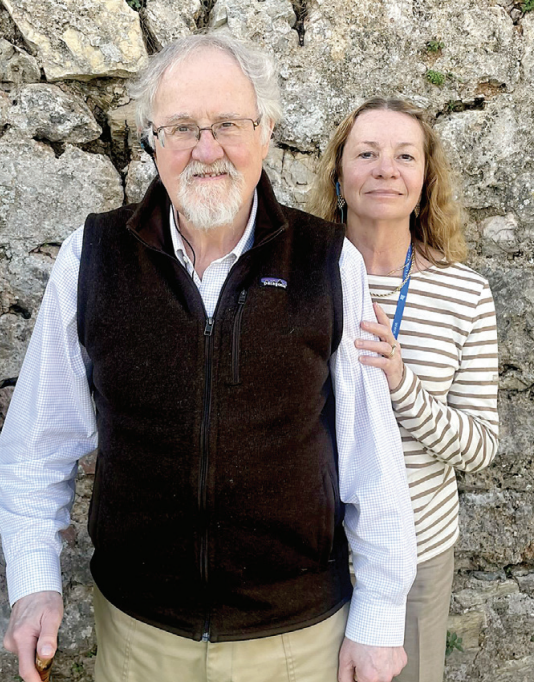
Ernst and Joan Berndt
When asked to comment on why we provided a donation to name a Records and Research Station kiosk in the Family Heritage Experience, our answer was brief. With its selection of family history questions—such as “what did my grandfather do for a living?”—the Records and Research station is the foundation of all the work that American Ancestors does.
Read more of the Berndt's story
There are many interactive stations that members and visitors will pass along the way in their family heritage journey, but Records and Research seemed to us to be the place where a newcomer to genealogy will unearth the fundamental clues that will guide him or her on the path to uncovering the richness of their family’s past. Thus equipped, they possess the basic tools to explore and profit from other exhibits in the Family Heritage Experience, or to delve more directly into the vast resources of the Brim-DeForest Library.
In a short period of time, and using easily-managed technology, a visitor can gain insight into questions such as ancestry, and cultural heritage, prompting them to learn more through engaging with a trusted leader in genealogy and historical research.
Family research is surprisingly addictive; it seduces the questioner and makes that person want to learn more. An added benefit is the readiness of knowledgeable staff to provide assistance in navigating American Ancestors’ collections. It’s a fun and very affordable historical attraction right in the heart of Boston.
Joan M. Berndt had a career in Financial Services and Treasury at Merck & Co. Inc. Ernst R. Berndt is a retired Professor of Applied Economics at the MIT Sloan School. Joan is a member of the Council and a Life Benefactor. Joan and Ernst Berndt reside in Boston, Massachusetts.
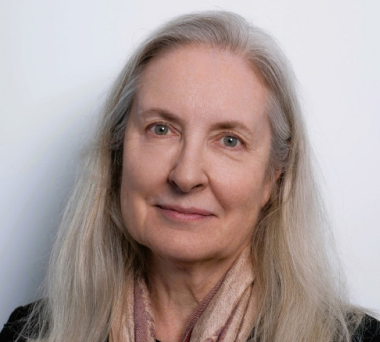
Gwill York
“This work is very close to things that I care a lot about: justice and flourishing. I now believe that [family history] is a really important component for this experiment we call the United States of America.”
Read more of Gwill's story
Assistant Vice President for Inspirational Giving Dionne Jackson interviews Gwill York, a member of the 10 Million Names Advisory Board and new Trustee, about her personal journey that prompted her to give back her time and treasure.
For Gwill York, 10 Million Names is not an abstract idea. It’s a magic that happens when families find a missing piece of their story. “The intimacy of the work and the joy that it has brought to so many people has been beyond my imagination,” York said.
York references Aaron Haynes, an African American man who reached out to American Ancestors after finding an unusual document in his basement. He urgently needed to know what it was. It was confirmed to be an authentic freedom paper of an ancestor who lived in Maryland.
“This is what 10 Million Names makes possible,” York said. “What was once hidden in the basement becomes a verified record and a family can hold its story with confidence.”
York’s instinct to show up was shaped early by parents who were committed to the Civil Rights movement. She learned the importance of amplifying voices that have been left out. That impulse guides how she gives today. York describes her generosity as relationship-driven, grounded in listening, learning, and being present. She has spent time with families in Charleston, Savannah, New Orleans, and other places where this work feels personal. Those visits, she said, have been joyful, especially when records are put into accessible formats so families don’t have to do the legwork alone.
Now, after seven years as a Councilor, York is becoming a Trustee, where she will help guide strategy, fiduciary oversight, and mission-based leadership. She sees this as an opportunity to bring skills, ask good questions, and support the team’s work. When CEO & President Ryan Woods invited her to join, her “yes” came easily. “I feel personally invested in helping to build the family trees of as many Americans as possible,” she said. “And this seems like a terrific place to invest time and treasure.”
York’s decision arrives at a time of great momentum. She points to the organization’s rebrand, strengthened leadership, and progress. “10 Million Names success of publishing a million names per year has been exciting,” she said. “This work is very close to things that I care a lot about: justice and flourishing.” She adds, “I now believe that [family history] is a really important component for this experiment we call the United States of America.”
As a Trustee, York will help guide what comes next. This includes expanding the work and keeping its standards, so more families can find what they’ve been missing and feel seen in the process.
Gwill York is an entrepreneur with 30 years of experience financing early-stage technology and healthcare companies. She is the co-founder of Lighthouse Capital Partners. She has been an Individual Member since 2018 and resides in Cambridge, Massachusetts.
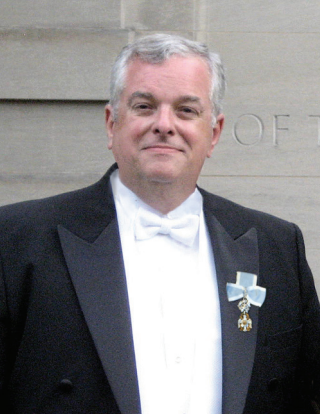
Ross Gamble Perry
“I had been a member for years for my personal genealogy and had learned about and appreciated the organization for its business success and vision for a decade. I’m honored to be part of the team and look forward to continued support and engagement.”
Read more of Ross's story
In 1987, the bank where I was employed at the time moved me to Washington, DC, and this gave me the opportunity to work on my family history with all the resources in the area. I’ve always had a love of history, and genealogy gave me the link between my family and the events in our shared history. I soon discovered that my lineage was 75% New England, and while I could build the big picture in Washington, there were many gaps that needed more local information. The internet was just developing, and my best tool was Everton’s Genealogical Helper (remember that?).
On my next business trip to Boston, I went to the now known as Brim-DeForest Library just to kick the tires. Wow, I still remember the first encounter. Open stacks, extensive manuscripts and archives, and extremely helpful and supportive staff. I was hooked and made many return trips. Over time, I was able to fill in most of my gaps, identify my Perry line back to Hertfordshire in the early 1500s, and document my Society of the Cincinnati line. Robert (Bob) Charles Anderson was particularly helpful.
As I rose in the leadership of the Society of the Cincinnati, I started to become aware of how well-run American Ancestors was as a business entity. The banker in me appreciated the growth and efficiency of the organization, and I started to ask questions of those I knew in the American Ancestors leadership team so that I could understand and perhaps emulate some of their best practices with the Cincinnati. Brenton Simons, Ryan Woods, David Trebing, and Jennifer London were patient and helpful with my many rookie questions, and they encouraged my continued interest.
My final step was to understand and endorse the vision of American Ancestors, how they rebranded from NEHGS to American Ancestors and expanded and embraced their mission to include all Americans. The Society of the Cincinnati was embarking on a similar journey as we developed the American Revolution Institute to reach beyond our 4,400 lineage members and advance the message of the importance of the American Revolution to all 340 million Americans. I had numerous talks with American Ancestors leaders on this topic, and all were open and incredibly supportive.
So, it was almost an anti-climax when Brenton asked me to join the Council in 2022. I had been a member for years for my personal genealogy, and had learned about and appreciated the organization for its business success and vision for a decade. I’m honored to be part of the team, and look forward to continued support and engagement.
Ross Gamble Perry is a retired senior vice president and managing director of the private wealth management division at SunTrust Bank and the VA/DC member and president general of the Society of the Cincinnati. He has been an Individual Member since 1999 and resides in Arlington, Virginia.
Joann Lamb
“And then I discovered American Ancestors. It became easy to trace each branch of the family, one generation at a time. I worked diligently for years, and the family tree grew accordingly.”
Read more of Joann's story
For years, I have been interested in our family history. My mother and great aunt would tell stories about the old days, and it always fascinated me. My great aunt lived to be 87 and seemed like my best connection to the past. My father’s sister was another source as she would comb the family cemeteries for information from headstones. I created rudimentary family trees on sheets of paper, taped together.
At the time, I worked full time, and I was unable to spend the necessary time combing through archives to get more information. When Ancestry began on the internet, everything changed. And then I discovered American Ancestors. It became easy to trace each branch of the family, one generation at a time. I worked diligently for years, and the family tree grew accordingly. Although my mother’s family had been more prominent in the tales told, my father’s family was much easier to trace.
I am now back to the 1400s. What does one discover? My 12th great grandmother was William Shakespeare’s aunt; my 6th great grandfather was the grandfather of Nathan Hale; my 7th great grandfather, Sgt. John Ayer Jr., was killed during the French and Indian War; my 10th great grandfather was John “The Martyr” Rogers, burned at the stake in 1555 by Queen Mary, etc. Ancestors came from Scotland, via Northern Ireland to Boston. Not finding Boston a comfortable place, they moved inland and assisted in the founding of Londonderry, NH. And by the 1800s all my direct ancestors had moved to New Brunswick or Nova Scotia. Along with our famous ancestors, we feel guilty about others. We had slave owners, a judge at witch trials in Salem, and after the Acadians were evicted from Nova Scotia, the British made the lands and farms available to Loyalist immigrants from Massachusetts and Connecticut.
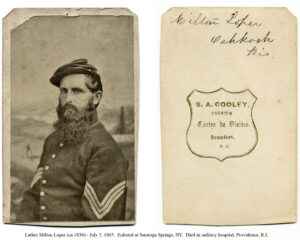
Martha Deed
“After an hour with the Beekman Patent database I see that I will be able to verify linkages that so eluded me. This one resource alone has made my annual subscription worthwhile.”
Read more of Martha's story
I grew up knowing we were descended from John Alden and Priscilla Mullins from the Mayflower, surrounded by books, newspapers, and magazines, some written by my own relatives and ancestors, and two of whom published The Long-Islander for a total of 77 years, both acquaintances of Walt Whitman. I now understand these stories were only the beginning of the story of who my family is.
I joined American Ancestors well into my family history journey, unaware of how great a resource I had found. When I joined, I was not convinced it would provide anything more than enjoyable reading. When the Weekly Genealogist sent a link to the database, “Dutchess County, NY: The Settlers of the Beekman Patent, Volumes 12-14,” I was proved wrong. This database fills in a lineage gap I have been studying for years. I had mostly given up looking. After an hour with the Beekman Patent database I see that I will be able to verify linkages that so eluded me. This one resource alone has made my annual subscription worthwhile.
There are other examples. The educational lectures, American Ancestors magazine, and the 10 Million Names project have all significantly added to my ability to do better with my own stories. The digital databases of Tea Party participants and observers and the articles on Loyalists are all helpful. The surveys in The Weekly Genealogist encourage me to think more broadly about my ancestors. I will be renewing my membership for years to come, receiving each new Weekly Genealogist release with the expectation of more revelations and more leads to explore.
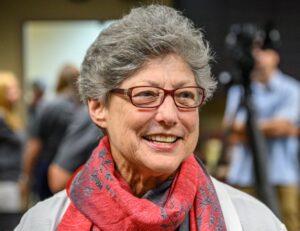
Nancy Johns
“Amazing history to be able to share with my children! My membership with American Ancestors has provided untold discoveries and understanding.”
Read more of Nancy's story
I started my American Ancestors adventure in a small way. I knew, word of mouth, that my Paternal Grandmother, Ruby Adeline Bisbee, had Mayflower roots but that was about it. Our family on that side had immigrated to Northern California in 1900 when she was 2 so no knowledge of any New England history. Through American Ancestors I began to piece together my tree.
I had started this on Ancestry so continued to collect data there. Classes were my most effective way to move ahead (or should I say backward). Mayflower Roots came out of the woodwork The supposed word-of-mouth connection through Pratt was iffy but others with solid citations were amazing- Chilton, Rogers, Tilley, Howland. These were part of both sides of my grandmother’s history.
Then fleshing out my tree through Great Migration information and again classes on New England in the 17th and 18th centuries enriched my experience and understanding. This understanding lead to my Maternal Grandmother’s roots in 17th century New England and Virginia with some arrivals as early as 1630. Amazing history to be able to share with my children! My membership with American Ancestors has provided untold discoveries and understanding.
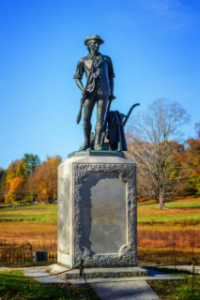
Cale-Deane Labram
“These discoveries make history personal for me. They connect famous moments and familiar names with the people in my own family and remind me how much I might discover.”
Read more of Cale-Dean's story
When I think about my Revolutionary ancestors, I am amazed by how many of their stories have become part of American history. Captain Isaac Davis, whose grandfather Abraham Gibson was my great-great-great-great uncle, led the Acton Minutemen and four other companies across the Old North Bridge on April 19, 1775, where he was shot through the heart. He became the model for the iconic Minuteman statue. The sculptor used photographs of my father’s family as references, and when I look at Isaac’s face, I can see my dad. Another second cousin, Colonel William Prescott, commanded American forces at the Battle of Bunker Hill. And I cannot forget my great-great-great-great uncle, Dr. Samuel Prescott, who completed Paul Revere’s ride to Concord to warn that the British were coming.
There are still family mysteries I hope to solve as I have been searching for documentation proving that my great-great-great-grandmother Priscilla Lee Gibson was the daughter of the parents I believe are hers. Her four sisters have New York birth records, but Priscilla does not. She is in my direct line from Mayflower passenger Richard Warren.
Fortunately, my grandmother Lang recorded the names of several relatives in my great-grandmother’s 1935 funeral remembrance book, leaving important clues to my father’s family history.
My mother’s side has equally fascinating stories. I used my great-great-great-great-grandfather John Carpenter as my qualifying ancestor for the Daughters of the American Revolution. An early settler in the Northwest Territory, he built Carpenter’s Fort near Steubenville along an Ohio River tributary. He had been a neighbor and friend of George Washington.
In 1990, my son Eric and I found a quotation attributed to Washington about John: “He is a good fighter. His legs are too short to run!” That description still makes me smile. These discoveries make history personal for me. They connect famous moments and familiar names with the people in my own family and remind me how much I might discover.
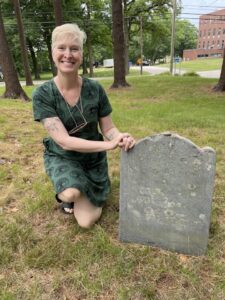
Kathrine Aydelott
“Exploring my heritage through American Ancestors didn’t just deepen my own roots. It gave me the tools—and the magic—to map community in present and past at once.”
Read more of Kathrine's story
What first brought me to American Ancestors was a simple desire to understand where I came from. Exploring family heritage with American Ancestors, in addition to connecting me to my family’s history, has also made me delightfully dangerous at faculty meetings. Over the years, I’ve traced colleagues and friends back to colonial Massachusetts and French Canada. I’ve told co-workers that they are distant cousins and shown the office manager that she descends from 17th-century settlers. I discovered that people sitting in the same room are often connected in ways they never imagined.
Genealogy trained me to notice patterns across generations and communities. I don’t just look at one family. I watch migrations ripple from Massachusetts into Maine. I see naming patterns echo across generations. And I bring that instinct into the present. That’s the joy: weaving the tapestry of connection. It’s puzzle-solving at scale. Not only, “Who was her father?” but “How does this entire room fit together if you go back ten generations?”
Exploring my heritage through American Ancestors didn’t just deepen my own roots. It gave me the tools—and the magic—to map community in present and past at once. I hope future generations continue to preserve not only records and photographs, but also the stories and traditions that help us understand one another across time.
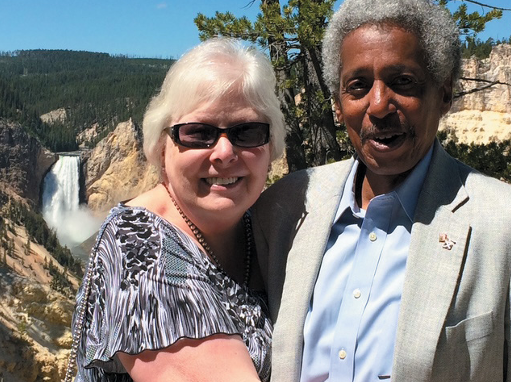
Helen E. R. Sayles
“When my husband DuWayne and I joined Ancestry.com, I jumped into the captivating world of genealogy. I was enthralled by the stories of my ancestors and eager to devote more time to unearthing my family’s past.”
Read more of Helen's story
I was particularly drawn to my paternal grandmother, whose life seemed rich with mystery. However, differing family narratives about her ancestry left me facing a brick wall. In a serendipitous meeting with Brenton Simons, the then-President & CEO of American Ancestors, I shared my challenge. He reassured me that their team of researchers could assist, and they did—European ancestry often comes with accessible records if you have the right support.
My passion for history is deep. However, my understanding of African American history and the legacy of slavery was limited. I resolved to change that. In a time when misinformation can blur the lines of truth, I believe it’s vital for everyone to engage with historical realities. I immersed myself in well over 20 books—one of which, nearly 900 pages long and dense with detail, took me almost a year to complete. This journey was enlightening, yet it was infuriating to recognize that the disenfranchisement of Black Americans continues into the 21st century.
In 2021, we embarked on an in-depth exploration of DuWayne’s family history, fully aware that his genealogical path would be more challenging. We started with his father’s lineage, and with the help of our genealogist at American Ancestors, we found the plantation where DuWayne’s great-grandfather, Reuben (1858–1891), had been enslaved and discovered that the family name was not Sayles. Reuben had taken the surname of Young and married Celia Wells, with whom he had three children. After Reuben’s death, Celia married Robert Sayles, whose name Reuben’s children took. We have since found so much more—even white ancestors whose DNA DuWayne shares—suggesting tragic and, unfortunately, not uncommon circumstances of birth.
African American genealogy is often fraught with obstacles, yet stories uncovered are a testament to resilience and strength. When I learned about 10 Million Names, I thought how wonderful it would be if everyone experienced the same opportunity that we had to research their family, because there’s a great joy and sense of grounding when you can learn that history. It’s a gift to generations in the future.
10 Million Names is a substantive way that people can make a meaningful difference in the lives of others, either financially or by introducing 10 Million Names to others. This is not a short-term project; it will go on for decades. It has such incredible value that if you want to make a difference, you can. The pursuit of knowledge enriches our understanding of ourselves and connects us to the broader tapestry of history.
Let us all take the plunge into our own genealogical journeys. Together, we can ensure that every voice is heard and every story is told.
Helen E. R. Sayles is a Life Member and a Trustee. She resides in Concord, Massachusetts.
Erik LaPrade
My relationship with American Ancestors mirrors a similar path to other members: starting slowly and building continuously, I became aware of and took advantage of the breadth of resources available. I knew my father was 100% French Canadian from Western Massachusetts, and there were many extended family members throughout New England.
Read more of Erik's story
Inheriting a photo album and a manila folder with assorted documents, I became determined to make sense of it. I started listening to webinars and podcasts and purchased guidebooks, all of which led me to American Ancestors and its databases. Joining as a Guest Member, I learned to navigate their online databases. While on vacation in Boston, I took my two sons to the library on Newbury Street, and we were all impressed by how many of our ancestors appeared in the historical books. I realized that becoming an Individual Member opened up many more resources.
After I developed a family tree on two websites, I hit pause. Using the Hire a Researcher program to commission a custom project, I wanted a professional to review and validate my tree, confirm people and dates, and add any documents to personalize the historical names on the tree. Genealogist Sheilagh Doerfler provided me with these services and found many documents already translated. My next step was to attend a Research Getaway in Boston for further research and to continue adding detail to the family tree.
I upgraded to a Supporter Member when I reached the point where it became apparent that I needed to pursue a two-pronged strategy: self-inquiry and discovery, and engage with expert researchers to answer questions I couldn’t resolve and unravel unexpected problems. Sheilagh assisted with a second Hire a Researcher project to expand my research. One vexing challenge on the second project was acquiring a copy of a book at the Bibliothèque Nationale in Quebec. Two attempts using interlibrary loans were declined, including one via the local Midwest Genealogy Center. Sheilagh was successful in borrowing a copy and sent me PDFs regarding my 4th great-grandfather. It was a success, and I believe only American Ancestors could have accomplished it.
As a Supporter Member, I utilized annual consultations to discuss roadblocks and try to solve problems. I created a running challenge list to be discussed during my consultations. As I expanded research beyond my paternal line, I widened the scope to include my maternal line and have been doing work on my wife’s family. I took a long list of tasks and questions to Salt Lake City, participating in the Fall Research Tour. Both pleasant surprises and disappointments drove further research activities. I expanded my family history research, including travel to Bergen, Norway, to visit the church where my parents were married, cemeteries across Massachusetts to view the grave sites of relatives, and homes of great-grandparents where families were born and raised.
I participate in Ask a Genealogist Live Chat and occasionally the Request Photocopies feature. As part of my ongoing activity, I regularly attend both current and archived webinars. As an example of the value contained in these webinars, at Senior Genealogist Rhonda McClure’s recent webinar, she suggested the Genealogist’s Handbook for New England Research. I used it to validate a long-standing family story. Accessing archived title deeds, I confirmed indeed that my maternal great-grandparents bought and later transferred the title of their home to my grandparents in Easthampton, Mass., and that is the home where my father was raised.
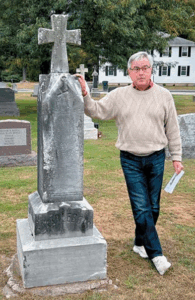
Erik LaPrade has retired from a career in corporate marketing and advertising. He joined American Ancestors as an Individual Member in 2018 and is currently a Supporter Member. He lives in Kansas City, Kansas.
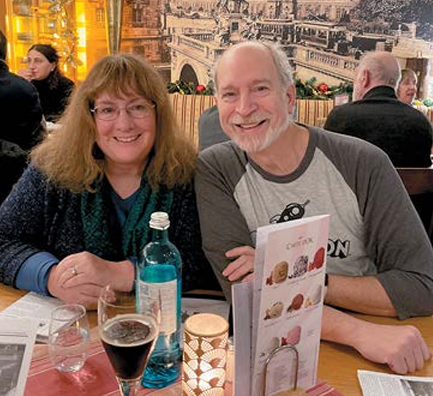
Julia Schmolke
“We’re a family and we’re a tree. Our roots go deep in history. From my great-great-granddaddy reaching up to me, we’re a green and growing family tree.”
The above quote, the chorus of the song “Family Tree” by Tom Chapin, expresses my feelings about the importance of family and family history. I feel a strong sense of connection to my ancestors and down to my grandchildren.
Read more of Julia's story
My first knowledge of genealogy came when I was about nine, and my mother went off every week to the Minnesota Historical Society to do research. We had some turn-of-the-century genealogies, and I used to pore over them and write stories about my ancestors. I learned that my father researched his family back in the 1940s. I have all the letters he sent and received from relatives.
My parents were charter members of the Minnesota Genealogical Society. They started a project recording inscriptions in our county cemeteries. Helping them, I developed a real love of old cemeteries, which has lasted until this day. Find a Grave is a great resource, but it doesn’t compare with standing at the base of one’s 6th great-grandparent’s grave.
In about 1968, my mother joined the New England Historic Genealogical Society and later became a Life Member. In 1999, she and I went together to Boston for a “Come Home to New England” educational program. I’ve loved sharing a common interest with my parents. My father and I would go to the local Family History Center together, where he traced our ancestors in the Norwegian parish records.
I’ve attended five research tours to Salt Lake City with American Ancestors and definitely recommend them to others. I’ve also attended many webinars and classes offered by American Ancestors, always of the highest quality. My husband and I have attended two trips, with Robert Charles Anderson to Leiden and Plymouth, learning about the Pilgrims. We went on several Heritage Tours with Curt DiCamillo to England, Italy, Austria, Germany, Bermuda, and New Orleans. Not only have I learned a lot, but we have made many friends!
In 2018, I made the commitment to become a Life Member and have been a Councilor since 2020. I felt it was important to give back to an organization that had helped me in my journey.
My genealogical journey has been very rewarding. I have many colonial New England lines, including Mayflower and royal ones. I’m half Norwegian and one-eighth Irish. I have extended my research to include my husband’s family and those of my children’s spouses. I have significant material for my research efforts since I have seven children-in-law. Recently, I was thrilled when my 15-year-old granddaughter told me she was fascinated by genealogy. Now I know who will carry my torch!
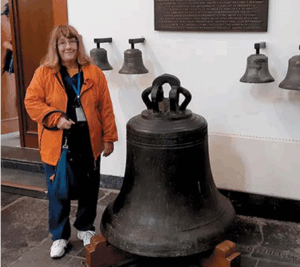
Julia Schmolke joined American Ancestors in 1999 and is a Life Member and Councilor. She has been a genealogical researcher for over forty years and speaks on genealogical topics to various local groups. Julia resides in Stillwater, Minnesota.
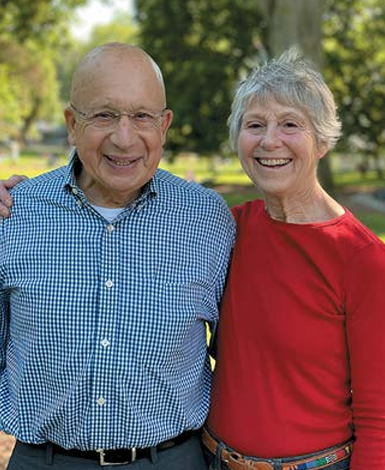
Beatrice Nessen
My husband, Peter, and I were first referred to American Ancestors through a friend of Irish descent who has archived her family material at the organization. She suggested I explore the resources, even though I didn’t know that American Ancestors had resources for families of Jewish heritage or who had come here as recently as World War II.
Read more of Beatrice's story
We were pleased to learn about the archive of New England Jewish families at the Wyner Family Jewish Heritage Center (JHC), and we eventually decided to donate materials from both of our families to the center in 2018. Peter and his two brothers donated documentation about their grandparents’ immigration from Russia to Canada, where Peter’s father was born, and the family’s subsequent life in the United States. Peter’s maternal grandfather immigrated from Russia to the United States but would never talk about life and pogroms in Russia under the czar, so Peter and his family learned not to discuss those family stories. Through my encouragement, he and his brothers welcomed the idea of archiving this history in The Nessen Family Papers at the JHC.
My family story is represented in The Jews of Tachau Papers. Both my maternal and paternal sides come from a small rural town in Bohemia, Tachau (now Tachov, located in the Czech Republic), which had a thriving Jewish community over several centuries. Family members began to migrate to other parts of Europe and North and South America in the 19th and early 20th century. My immediate family immigrated here from France, where my father was employed by a French firm in 1940, after the French surrender to the Nazis. Many of my parents’ generation with origins in Tachau also fled Europe for the US to escape the Nazis. Tachau continued to be the glue that kept all these families connected.
My generation of the children of World War II refugees grew up hearing stories of Tachau and the lives of our parents and grandparents. It has been important to me to pass on the rich story of this community from a distant time, location, and culture, and make it available to descendants and anyone who wants to study it. I inherited materials from my family and have been collecting a great deal of information about other Tachau families, and I recognized the importance of archiving this historical trove so it wouldn’t be lost. The Jews of Tachau collection includes materials ranging from family histories and genealogical research to personal papers and memoirs to cookbooks and family film reels. Both I and other relatives have used the collection for research, including a distant relative who was able to fill in a genealogical gap in her family’s history. We appreciate the JHC’s archivists’ care for the collection and their assistance in accessing it.
Because our family’s story might otherwise be lost, it is so meaningful to know that it is preserved and available at the JHC. It’s also important that both Peter’s and my family history is part of the wider history of the Boston and New England Jewish community preserved at the JHC. Jewish immigrants and their descendants have contributed so much to this region, and we are fortunate that the history is preserved and accessible for all to learn from.
Beatrice Nessen spent her career in urban planning and public policy. She is a Wyner Family Jewish Heritage Center supporter. She and her husband, Peter, reside in Boston, Massachusetts.
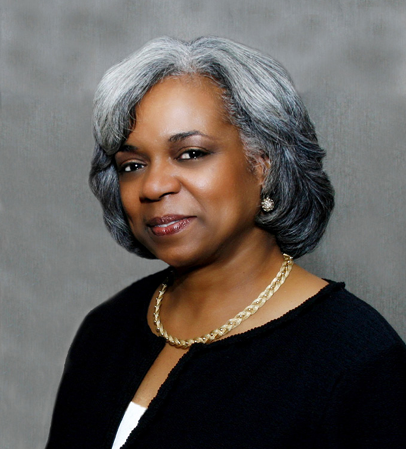
Donata Russell Ross
My father, Herman J. Russell, Sr., became an entrepreneur at the very tender age of eight. His father and hero, Rogers Russell, Sr., had only a fourth-grade education. He led by example by establishing a plastering business before the Great Depression. Despite the financial constraints of raising eight children, my grandparents taught their son the plastering trade and the value of hard work and integrity. These life lessons fueled an entrepreneurial spirit and enabled their son to earn enough money to finance his education at Alabama’s Tuskegee Institute, where he earned a degree in building construction.
Read more of Donata's story
My father frequently spoke to us about his determination to become a successful entrepreneur, and our family business, H. J. Russell & Company, ultimately became an exemplar of African American entrepreneurship. Still, I’ve always longed to learn more about the generations that came before him and how their determination and zest for success survived the arduous racial and economic challenges they surely faced.
I was excited to learn about and contribute to 10 Million Names because so many African Americans don’t know very much about their family histories and the lineages that have helped make us who we are today. And I really believe that if we could understand more about our history, it would also help create much more interesting connections for future generations.
For so many years, we as a people have been brainwashed to believe that there is nothing interesting, regal, or important about our past. The ability to trace our lineage and learn more about the people in our past who made us who we are not only motivates but also gives us a sense of purpose.
We have been able to learn a little bit more about my mother’s family history. Interestingly, my mother’s great-grandfather, Shephard Peek, was given land by his enslaver and, over time, purchased additional land, eventually owning and operating a cotton gin. We believe this was the first Black-owned cotton gin in Georgia. Also, in the 1860s, he served in Washington, DC, as a US congressman from Georgia. It’s stories like these that indicate how we as a people had a vision about how the world should be and were willing to stand up and fight to represent our interests in a way that so many people could not. It is important for African American families that have experienced success to help change the narrative about who we are and what we represent in our nation’s history. If we don’t make a commitment to share these stories and get it right, who else will?
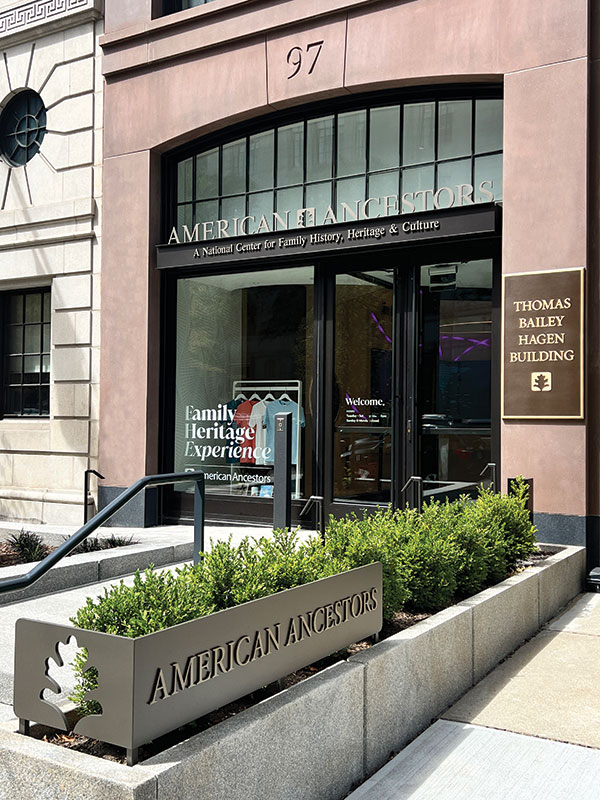
Join a Giving Society
Together we can do so much. Join a community of people who share your passion for family history by becoming a member of one of our giving societies.
Become an American Ancestors Insider
Do you want to receive exclusive email updates directly from American Ancestors?
Get direct and instant access to a member of our team, who will share information about your impact and update you on new projects that align with your interests.